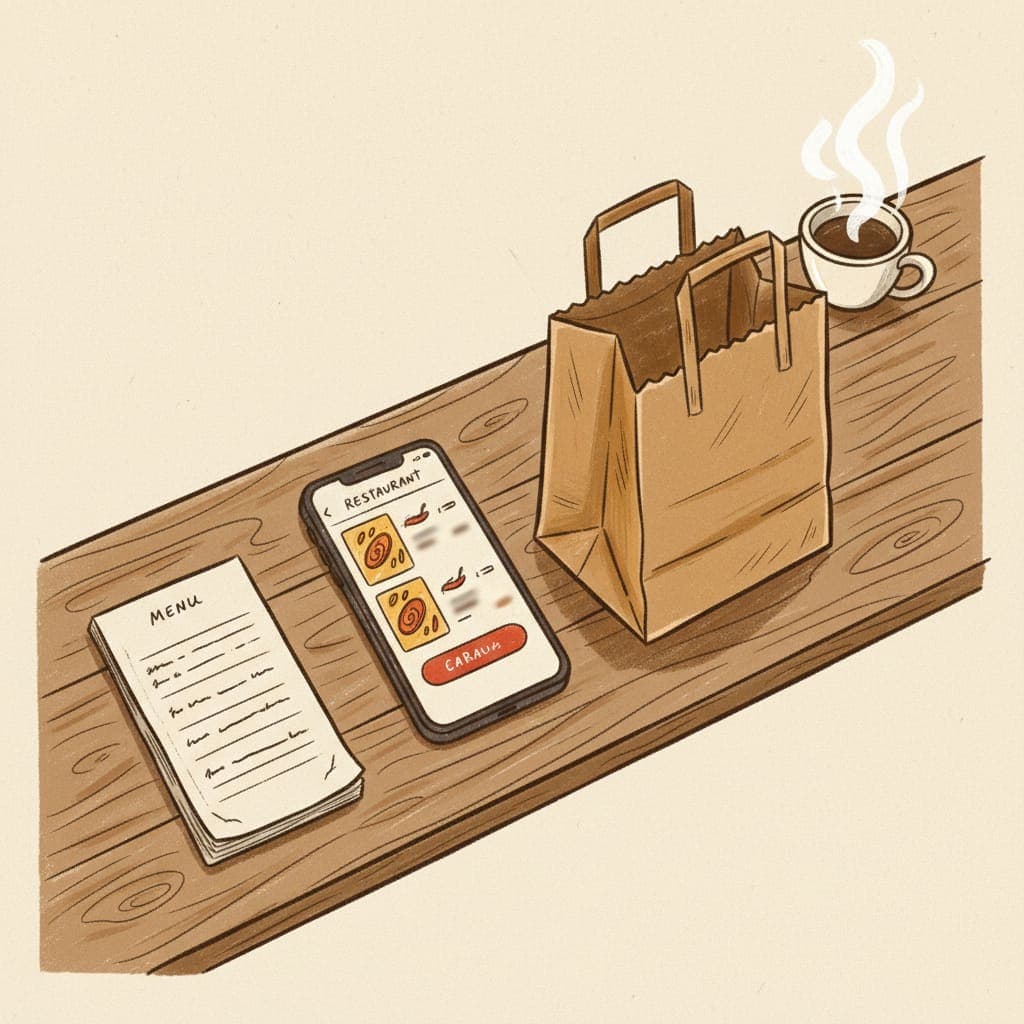
If you're searching for "direct ordering website for takeaway UK", you've probably already done the maths and worked out that Just Eat or Deliveroo are taking £1,500–£3,000+ a month out of your kitchen in commission and fees. The question now is what to put in their place.
This guide walks through the three real options for setting up direct ordering, the honest UK pricing for each in 2026, and the hidden costs nobody on a sales call mentions. We build restaurant websites with online ordering ourselves through our website design service, so we have a vested interest — the goal is that you walk away knowing whether you need us, a £25/month plugin, or somewhere in between.
The honest one-line answer
If you're doing under 200 orders a month direct, start with a £20–£60/month plugin on your existing website. If you're doing 200–800 orders/month, a dedicated platform at £100–£300/month makes sense. Above 800 orders/month — or if you have multiple locations — a custom-built solution starts to earn its keep.
Most UK independent takeaways sit in the first or second bracket. The third one is rarer than the agencies selling £5,000 builds suggest.
What "direct ordering" actually means (and what it isn't)
Direct ordering means a customer places their order on your website, paying you directly via card or cash-on-delivery, with no commission going to a marketplace. You own the order data, the customer email, and the relationship.
What it's not:
- A "menu page" with a phone number. That's a menu page.
- A link from your site to your Just Eat listing. That's still a Just Eat order — they take their cut.
- A WhatsApp form ("send us your order on WhatsApp"). Useful as a stop-gap, not a real ordering system.
A working direct ordering setup needs four things:
- A menu customers can browse on phone (where 70%+ of UK takeaway searches happen)
- A basket and checkout that handles modifiers (spice level, extras, drinks)
- A payment processor (Stripe is the UK default — 1.5% + 20p per transaction)
- An order-arrival surface in your kitchen — printer, tablet, or both
Miss any of these four and you have a brochure site, not an ordering site.
The three real options
We'll cover each in detail below. Quick comparison first:
| Option | UK monthly cost | One-off | Order volume sweet spot | Speed to launch |
|---|---|---|---|---|
| Plugin on existing site | £20–£60 | £0–£300 | Under 200/month | 1–2 weeks |
| Dedicated platform | £100–£300 | £300–£800 | 200–800/month | 2–4 weeks |
| Custom build | £20–£80 hosting | £3,000–£10,000 | 800+/month or multi-location | 6–12 weeks |
The numbers above are honest, current UK pricing — not the "from £X" headline figures on platform sales pages.
Option 1: Plugin on an existing site (£20–£60/month)
The lowest-friction path. You already have a WordPress, Wix, Squarespace or similar site; you add an ordering plugin or embedded widget that lives on a /order page.
Tools in this bracket that actually work in the UK:
- GloriaFood — free tier exists, paid from £15/month for online payments. Decent for under-£15-order-value menus.
- Flipdish — £25–£60/month depending on plan. Better UI than GloriaFood. Integrates with Stripe.
- Toast TakeOut UK — landed in the UK 2023, £35–£60/month. Stronger if you also use Toast POS in-shop.
- Square Online for Restaurants — free to use, takes a higher per-transaction fee (~2.5%). Suits absolute beginners.
What you get for the money:
- A working menu/basket/checkout that lives at yourshop.co.uk/order
- Card payment via Stripe or the platform's processor
- Order notifications by email + SMS (some plans)
- Basic delivery zone setup (postcode-based or radius)
- Mobile-optimised checkout
What you don't get:
- Real customisation of the look and feel — most of these are template-based
- Strong promotional tools (loyalty, recurring offers, discount codes work but are basic)
- Inventory tracking for menu items
- Multi-location management if you grow
- Customer data ownership — some platforms hold it on their domain
When this tier is right: you're testing whether direct ordering even works for your shop, you're doing under 200 orders/month direct, or you have an existing site you don't want to rebuild.
When it's wrong: you want the experience to feel fully branded, you have complex modifiers (build-your-own pizzas, family meal deals with selections), or you're committed to scaling direct ordering past 200/month.
Option 2: Dedicated platform (£100–£300/month + setup)
The middle bracket. These are platforms built specifically for restaurants — your site IS the ordering platform, not a plugin on a separate site. UK-relevant options:
- Flipdish Pro / Enterprise — £150–£400/month depending on volume and features
- Vita Mojo — UK-built. Strong on POS integration, fair on online ordering. From around £200/month.
- Lunchbox — newer entrant, popular with multi-location ops. From £150/month.
- Yumbi — South African origin, growing UK presence. Often white-labelled.
Setup fees: Most charge £300–£800 one-off for the initial build (menu input, branding, delivery zones, payment setup). Some waive this on annual contracts.
What you get for the money:
- A branded site that looks like your business, not a generic template
- Mature features: modifiers, upsells, scheduled orders, loyalty, recurring discount codes
- A dedicated app option for an additional fee (typically £100–£200/month — usually not worth it for single-location takeaways)
- Integrations with POS, kitchen display systems, delivery dispatchers (Stuart, Orkestro, in-house drivers)
- Customer data you actually own, exported on request
- A real support channel — phone or chat, not just docs
What you don't get even at this tier:
- Full design control — you can brand, but not redesign
- A site that ranks well on Google for non-ordering search terms (these platforms aren't strong for content marketing or local SEO)
- Ownership of the underlying tech — if the platform raises prices or goes under, migration is painful
When this tier is right: you're committed to direct ordering as a core channel, you're doing 200–800 orders/month, you want a real platform-level experience without the complexity of custom-build.
This is the bracket that most takeaways committing seriously to leaving Just Eat end up at. We covered the maths in should I leave Just Eat and go direct — a platform here pays for itself comfortably once you're shifting £8,000+/month off marketplace.
Option 3: Custom build (£3,000–£10,000 one-off)
A bespoke site built on something like WordPress + WooCommerce Food, a custom Next.js + Stripe build, or a Shopify Plus restaurant theme.
What goes into a £3,000–£5,000 build:
- 5–10 page custom site (homepage, menu, ordering, about, contact, areas served, blog)
- Custom-designed look matching your brand
- Stripe Checkout integration with order routing
- Order arrival via email and an admin dashboard (kitchen printer integration extra)
- Mobile-first, fast loading (under 2 seconds — Google rewards it)
- Local SEO setup (Google Business Profile, schema, location pages)
What goes into £6,000–£10,000:
- All of the above, plus:
- A native mobile app (or a strong progressive web app)
- Loyalty programme with tiers and points
- WhatsApp / SMS reorder system
- Multi-location dashboard
- Integration with your POS (Toast, Vita Mojo, Square, in-house)
Ongoing costs after the build:
- Hosting: £20–£80/month (Vercel, Netlify, managed WordPress)
- Stripe fees: 1.5% + 20p per UK transaction
- Maintenance retainer: £100–£300/month for ongoing updates, security, content
When custom is the right call:
- You're doing 800+ orders/month direct already
- You have multiple locations, each needing its own menu/hours
- The platform options can't handle your menu complexity (build-your-own pizzas with 30 toppings, custom meal deals)
- You want full SEO control — your direct-ordering site is also your marketing site
When it's the wrong call:
- You're under 200 orders/month direct — the maths doesn't work
- You're looking for a "set it and forget it" experience — custom builds need maintenance
- You don't have someone (in-house or contracted) who can do small CMS edits
We see ~10% of clients fit Option 3. Most who think they need it actually need Option 2.
What you actually need under the hood
Whichever option you pick, four things have to be present or it won't work:
- Mobile-first checkout. Most UK takeaway customers order on phone. A desktop-first site loses 30–50% of conversions on mobile.
- Speed under 2 seconds. Web Almanac data shows mobile conversion drops sharply past 2.5s page load.[4] Customers don't wait for slow ordering forms — they bounce back to Just Eat.
- Modifier support. Drinks, sides, extras, spice level. If your menu has any of these and your tool can't handle them, you'll lose orders to confused customers.
- A way for orders to actually arrive in your kitchen. Email is fine for low volume. Above ~20 orders/day you need either a tablet running the platform's app or a thermal printer that auto-prints incoming orders.
Tools that have great-looking checkouts but ship orders only via email get missed during Friday rush. We've seen takeaways lose entire evenings of revenue because the kitchen tablet was charging or the email landed in spam.
The transition — moving customers off Just Eat
Building a direct-ordering site is the easy part. Getting customers to use it instead of Just Eat or Deliveroo is the hard part. The handful of moves that work:
- A 10% discount or free side on the first direct order. Print on the receipt of every Just Eat / Deliveroo order. ROI is positive within 2–3 reorders.
- A QR code on every takeaway bag and table card. Even customers ordering in-shop see it.
- Trained staff phrase: "if you'd like to skip the commission next time, our direct site is yourshop.co.uk/order — 10% off your first one." Most owners we coach see the share of direct orders triple within 60 days of training the front-of-house team to say it.
- Loyalty programme that explicitly rewards repeat direct orders. Most marketplaces don't allow loyalty integration; direct ordering does.
- WhatsApp / SMS marketing to your existing customer list once you have an email or phone list. Stay within ICO PECR rules — opt-in language at checkout, easy unsubscribe.[3]
For Manchester and London takeaways especially, direct-ordering uptake compounds if you're also visible in local search for "[cuisine] near me" queries — customers searching that landing on your direct site rather than your Just Eat listing.
Hidden costs and traps
Six things that don't appear on the headline price:
- Payment processor fees. Stripe in the UK is 1.5% + 20p per transaction. On a £25 average order, that's about £0.58. Worth budgeting in.
- Refund handling. Direct orders mean direct refunds. You'll spend 1–3 hours/week on refunds at first; tooling reduces this over time.
- Delivery driver coordination. If you switch from Just Eat's drivers to your own (or to Stuart / Orkestro), expect a transition period of 4–8 weeks of figuring out routing, payment, no-shows.
- Cookie consent and GDPR. A UK ordering site collecting customer data needs a working cookie banner and a privacy policy that lists what you collect and why.[3]
- PCI compliance. Stripe and most reputable platforms handle PCI compliance for you. Don't roll your own card form.
- A 2–3 month "underwater" period where your direct-ordering revenue doesn't yet offset the platform fees. Plan a 3-month runway, not a 30-day one.
FAQ
How fast can I be taking direct orders? With a plugin (Option 1), 1–2 weeks from sign-up to first order. With a platform (Option 2), 2–4 weeks. Custom build (Option 3), 6–12 weeks. Add 4 weeks for any transition marketing to start working.
Do I need a separate website for direct ordering, or can I add it to my existing site?
Most plugins (Option 1) live on your existing site at a /order path. Platforms (Option 2) usually replace the homepage with their version. Custom builds (Option 3) are usually the whole site rebuilt around ordering. The right answer depends on whether your existing site is worth keeping.
Will this hurt my Google ranking? If the new site is faster, on the same domain, and properly redirected, no — it usually helps. If you change domain (yourshop-orders.co.uk instead of yourshop.co.uk) you'll lose existing ranking. Keep the same domain.
What about delivery — who actually drives? Three models: your own drivers (best margin, hardest operationally), third-party fleets like Stuart or Orkestro (mid-margin, lower operational load), or hybrid (your driver Mon–Wed, Stuart Thu–Sun). Most independents start with own-driver and add a third party for peaks.
Should I keep Just Eat alongside direct ordering? Almost always yes, at least for the first year. Cover the maths in should I leave Just Eat — the typical move is "rebalance, not leave." Marketplaces bring new customers; direct ordering keeps existing ones.
Can I do it without a website at all — just WhatsApp orders? Some takeaways run on pure WhatsApp + cash/bank-transfer. Works at very low volume. Breaks at 30+ orders/day because you can't track payments, modifiers, or delivery status without a real system.
The honest summary
The right direct-ordering setup depends on order volume more than anything else:
- Under 200/month direct: plugin at £20–£60/month, on your existing site
- 200–800/month: dedicated platform at £100–£300/month plus setup
- 800+/month or multi-location: custom build at £3,000–£10,000 plus £200/month ongoing
What to do this week, if you're considering this:
- Count your last 30 days of direct orders (if any). That number decides the tier.
- Read how much should a restaurant website cost UK to set realistic expectations on the build side.
- Demo two tools in the right tier (most offer 14-day free trials).
- Don't quit Just Eat the week you launch — run both for 90 days and watch the maths.
If you're in London or another high-CPC area, pairing direct ordering with a small Google Ads test (£300/month for 90 days) typically halves the time it takes to fill your new ordering channel. But the ordering surface itself comes first.
Sources & further reading
We help UK restaurants and takeaways grow online. Get in touch for a free audit.