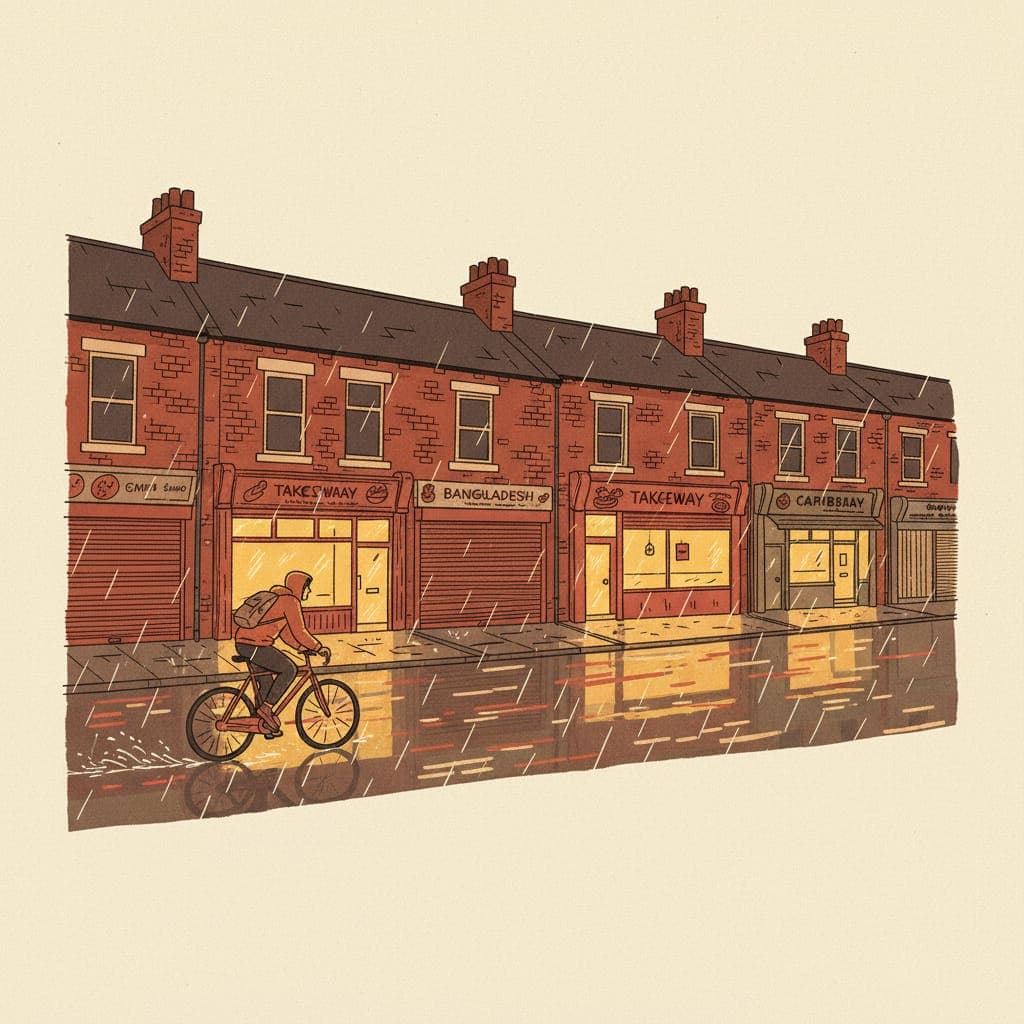
What we see in the Leeds market
Leeds is West Yorkshire's biggest food economy — bigger by independent-restaurant count and by total food spend than Bradford or Sheffield, with a notably different mix. The takeaway corridors in Harehills, Beeston, Hyde Park and Burley share more with Bradford in cuisine and customer behaviour. The dine-in scene in Chapel Allerton, Headingley, Roundhay and the city centre sits closer to Manchester's Northern Quarter than to anywhere in Yorkshire.
That split shapes the marketing playbook. Average takeaway ticket sizes in LS-postcodes typically run £15–£24, broadly similar to Bradford and Manchester. Average dine-in spend in LS1 / LS2 / LS6 sits closer to £25–£45 per cover — much higher in the better restaurants in the Calls and around Granary Wharf.
A few things follow:
- Google Maps three-pack is genuinely contestable in the takeaway corridors. Many LS6, LS8 and LS11 kitchens have under-maintained Google Business Profiles, which means a steady weekly routine on photos, posts and review responses moves rankings faster here than in higher-density London markets.
- The student calendar shapes demand more than in most UK cities. With roughly 65,000 students across the University of Leeds, Leeds Beckett, and Leeds Trinity, the LS6 (Hyde Park, Headingley) and LS2 areas swing 30–50% on weekly order volume between term-time and the long summer break. Marketing should plan for it.
- Leeds Festival weekend reshapes the market for late August. The weekend at Bramham Park, plus the displaced traffic in and around the city centre, noticeably shifts food demand and ad-click value for two to three days. We treat it as a separate planning event.
How Leeds customers find restaurants
Three patterns we see across kitchens we work with in LS-postcodes:
Google Maps does most of the discovery work outside the centre. A customer in Harehills, Beeston or Cross Gates searching "curry near me", "biryani delivery" or "halal takeaway" sees the local pack three-spot before anything else. Owning one of those slots is the highest-leverage move a Leeds takeaway can make. Our walkthroughs on why your restaurant might not show on Google Maps and how to rank a restaurant on Google Maps cover the foundations.
Instagram is heavily used for new-restaurant discovery in the city centre, Chapel Allerton, Headingley and Roundhay. Younger Leeds customers will check a restaurant's Instagram before deciding — recent posts, recent stories, whether the place still feels alive. A profile that hasn't posted in eight weeks is a real silent killer. Our Instagram for restaurants UK guide is the starting point.
Reviews compound visibly. A consistent review-collection programme typically moves a Leeds takeaway from 30 reviews to 150 in 12–18 months — visibly climbing the local pack. The competitive bar in LS-postcodes is meaningfully lower than in Manchester or central London, so the gain is more visible.
Delivery-app behaviour splits sharply by area. LS6 and LS2 (student-heavy) are aggregator-dominated, with high cyclist-courier density and short delivery windows — Deliveroo and Uber Eats lead. The takeaway corridors in LS8, LS11 and LS9 lean more towards Just Eat and longer delivery distances. We've covered the trade-offs in should I leave Just Eat and go direct.
Realistic ad budgets in Leeds
A few benchmarks from campaigns we run in the city:
- Standard LS-postcode takeaway zones work at £12–£18/day Google Ads spend. £400–£550/month produces 280–450 attributable clicks, which converts to roughly 18–28 attributable orders depending on landing page and offer.
- City-centre dine-in (LS1 / LS2) typically needs £20–£30/day because brand-led search is more competitive — the chain restaurants in the Trinity centre and around the Headrow buy a meaningful share of voice on cuisine + neighbourhood terms.
- Match days at Elland Road and Yorkshire CCC at Headingley shift delivery demand inside relevant zones. Leeds Festival weekend does the same for two to three days at Bramham. We plan around the fixture and event calendar for affected clients.
For a wider view of when paid even makes sense, see is Google Ads worth it for takeaways.
Postcodes we work in
- LS6 (Hyde Park / Headingley) — student-heavy, aggregator-dominated, term-time-sensitive, social-first customer base
- LS7 / LS17 (Chapel Allerton / Roundhay / Alwoodley) — higher-end suburban dine-in, Instagram-led, premium average ticket
- LS8 (Harehills / Roundhay Road) — dense Pakistani / Bangladeshi / Caribbean takeaway corridor, very contestable Google Maps local pack
- LS9 (Burmantofts / Cross Green) — mixed delivery + dine-in, growing independent scene
- LS11 / LS10 (Beeston / Hunslet / Belle Isle) — strong takeaway delivery zones, less saturated SEO landscape
- LS1 / LS2 (City centre / Headrow / Calls) — dine-in, lunch + evening focused, brand-led search competitive
- LS12 (Armley / Bramley) — established takeaway market, Eastern European population growth
- LS19 / LS28 (Yeadon / Pudsey / Farsley) — outer suburban delivery zones, accessible local-pack wins
What we typically work on for Leeds kitchens
For a Harehills, Beeston or Burley takeaway the highest-leverage starting point is a properly maintained Google Business Profile plus Local SEO — Leeds's takeaway corridors have genuinely contestable local packs, and a steady weekly routine moves rankings faster here than in Manchester or London. For Chapel Allerton, Headingley and city-centre dine-in restaurants the playbook shifts: an Instagram-led social media programme, a fast conversion-led restaurant website, and modest Google Ads on brand and cuisine terms. Most clients also benefit from refreshed menu and photography work — outdated photography is one of the most common things we tighten up in audits.
What we don't promise
We don't promise specific revenue lifts, ranking positions, or order-volume targets. Leeds is varied enough — Harehills, Headingley, the city centre and Roundhay are essentially four different economies — that any agency claiming a guaranteed outcome should be questioned.
What we do commit to: a written 90-day plan, monthly reporting, transparent pricing, and a clear pause or pivot if it isn't working by month four. If we look at your kitchen and think you'd benefit more from fixing one or two specific things yourself — sorting your GBP photos, replying to your reviews properly, posting once a week on Instagram — than from hiring an agency, we'll say so.