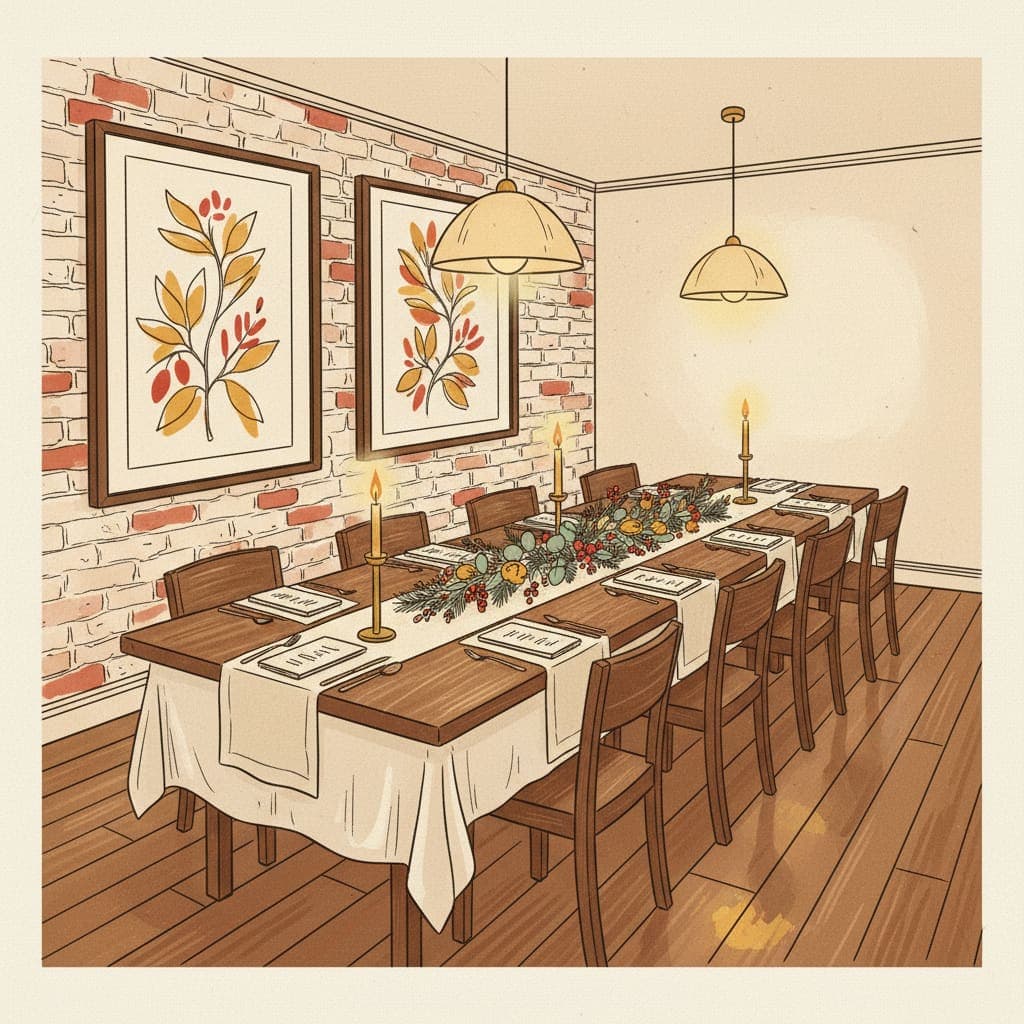
Private dining is usually the highest-margin revenue a UK independent restaurant can generate, and the channel most owners actively under-resource. A private dining booking — eight covers, a £55 set menu, a £200 wine spend, a Tuesday evening you'd otherwise have run at 40% capacity — is roughly £600 of high-margin revenue you didn't have to find from the street. Done weekly, that's £30,000 of incremental annual revenue at margins above your à la carte. The work to win those bookings consistently is not large — it's a properly-structured enquiry page, a fast first-response system, a clear deposit policy, and a follow-up sequence for enquirers who don't book on day one. This guide walks through each of the five, with the numbers and the operational detail.
If you're starting from "we have a private dining room but enquiries are sporadic," the changes below typically move enquiry-to-booking conversion from 18–28% to 40–55% within two months.
Why private dining is the underserved channel
UK out-of-home spending data shows roughly 14–18% of UK adults attend a private or group dining event (8+ covers) at least once a year — for weddings, work parties, milestone birthdays, anniversaries, corporate hospitality.[1] Most of those events are booked 4–12 weeks in advance, by one person (the "organiser"), who shortlists 3–6 restaurants, sends enquiries, and books with whoever responds first with a clear menu and price.
That last sentence is the entire opportunity. The organiser is not picking based on Google rank or Instagram aesthetic. They're picking based on whoever sends them a useful reply within 24 hours. Most independent UK restaurants take 2–5 working days to respond to a private dining enquiry. The booking has usually gone to the faster restaurant by then.
The fix isn't more demand. The fix is a system that converts the demand you're already losing.
The 6 ways private dining enquiries actually arrive
Map your current channels. Most independents under-invest in some and over-invest in others.
- Your website's private dining page — a typed enquiry form or a phone-call CTA. The highest-intent channel — these are people actively searching "private dining [your town]." Conversion rate (enquiry to booking): 35–60% if the page is well-designed and the response is fast.
- Google "Send us a message" in your Google Business Profile — surprisingly under-used, often where the enquiry chain starts before someone visits your site.
- Phone calls through your reservations line. Highest conversion (response is instant) but lowest volume if your business isn't already known.
- Email to your generic "info@" address — the slowest-converting channel because owners check that inbox last.
- Instagram direct messages — increasingly common, particularly for under-40 organisers. Often the first touchpoint before an enquiry form.
- Third-party marketplaces — DesignMyNight is the strongest UK marketplace specifically for private hire enquiries; OpenTable and Resy carry some volume but private hire isn't their focus.
You can run all six. If you can only run three well, pick: website page, GBP messages, Instagram DMs. Those are where 80% of qualified UK enquiries come from in 2026.
Page anatomy — what converts a private dining enquiry
A private dining landing page that converts has a specific shape. Most independent restaurant private dining pages get the order wrong.
The order that works:
- Headline. "Private dining at [restaurant name] — for 8 to [max] guests in [town]." Searchable. Direct. Avoid "intimate", "exclusive", "bespoke" — these words convert worse than plain language because they sound generic.
- The room. Three to five photos of the actual room, with the actual table, set up the way it'll be on the night. Not the main dining room. If you don't have a dedicated room and you do private dining as "we close half the restaurant," show that honestly — most organisers value honest presentation.
- Capacities. A single line: "Seats 8 to 24 guests in standing reception, 8 to 18 for a seated dinner." Be specific. Many organisers eliminate restaurants whose page doesn't list capacity.
- What's included. The room, the table, the service, the menu cards, the candles, AV if you have it. List what they're paying for — and equally, what costs extra (drinks packages, hire fee on certain dates, room dressing).
- Menu options. Three menu tiers (e.g. £45, £65, £85 per head) with sample dishes printed in HTML, not as a downloadable PDF. PDF downloads kill conversion because most organisers compare on screen.
- Minimum spend. State it. £30 minimum food spend per cover, or £600 minimum total spend midweek, or whatever your number is. Hiding minimum spend until reply emails causes 40% of enquirers to drop out when the number arrives.
- Deposit and cancellation policy. A single paragraph. £15–£25 per head deposit, redeemed against final bill, 14 days' cancellation notice for refund.
- Enquiry form. Six fields: name, email, phone, date(s) considered, guest count, brief message. Nothing more. See the form section below.
- Direct contact alternative. "Or call us on [number] / WhatsApp us on [number] / Instagram DM @[handle]." Some organisers won't fill a form.
- Social proof. One or two short quotes from past organisers, or — if you have permission — a photo from a past event.
- FAQ. Five to eight questions: dietary requirements, BYO policy, decorations, music/DJ, late finish, kids, accessibility.
The single biggest mistake: leading with "every event is unique, we'll tailor a bespoke proposal" instead of publishing prices. Organisers in 2026 are price-comparing on screen — give them what they need to shortlist you.
The enquiry form — six fields, no more
The most-converting enquiry form is the shortest defensible one. Every additional field reduces completion. The minimum useful set:
- Name
- Email address
- Phone number
- Date or dates you're considering
- Number of guests (approx)
- Brief message (e.g. occasion, any specific requirements)
That's it. Don't ask for budget. Don't ask for dietary requirements — that's an email-thread question once you've got the lead. Don't ask "how did you hear about us." All of those are conversion killers at the enquiry stage.
A modest tweak that works: a single checkbox above the submit button: "I'm happy to receive occasional restaurant updates from [name]." That's a clean PECR-compliant opt-in for your marketing list, captured at peak interest.[6]
Response speed is the conversion lever
Independent research and our own data both confirm: response speed is the single highest-correlated variable with enquiry-to-booking conversion. A first reply within 1 hour converts at roughly 2× the rate of a first reply within 24 hours. A reply taking longer than 48 hours converts at less than half the rate of a 24-hour reply.
Operationally, the system that works:
- During service hours. Enquiry-to-acknowledgement target: under 60 minutes. Acknowledgement can be a one-line "Thanks [name] — I'll come back tomorrow morning with menus and availability."
- Out of hours. Auto-responder confirming receipt and giving a realistic next-morning window. The auto-responder should include a phone number for genuinely urgent enquiries.
- First substantive reply target. Within the next working day. Include menus (as HTML or attached PDF), availability for their requested dates, the deposit and minimum spend numbers, and one specific question to keep the conversation going.
The biggest practical issue: most owners reply once and wait. The organiser comparing 3–5 restaurants doesn't reply to the first email immediately either — they reply when they've decided. Your follow-up sequence handles that gap.
The follow-up sequence
A workable follow-up cadence after first substantive reply:
- Day 3 (if no reply yet). Friendly nudge — "Just checking you got the menus through OK. Happy to hold the date if you want a few more days to decide."
- Day 7. Specific value-add — "We've had a couple of cancellations for [their preferred date] open up if useful. Otherwise no rush."
- Day 14. Soft close — "Your date's still on the calendar. Let me know either way — happy to release it if you've gone with somewhere else."
- Day 30. Re-engage with a different angle — "Hope the event found a home. If you're planning another (Christmas / summer / next year), we'd love to be considered."
Honesty in this sequence outperforms slickness. Organisers are inundated with sales-y follow-ups. A direct, brief, human follow-up is rare enough to feel different.
Pricing structures that work in the UK
Three pricing models, with the trade-offs:
1. Cover price (no hire fee). £45 per head, food only. Drinks billed separately on the night. Simplest for the organiser to understand. Easiest to fill on quiet midweek nights. Limits your upside on high-end occasions.
2. Minimum spend (no hire fee). "£800 minimum spend midweek, £1,500 minimum spend Friday/Saturday." Lets the organiser allocate spend between food and drink themselves. Works well for groups that drink heavily. The friction: smaller groups may struggle to hit the minimum and self-eliminate.
3. Hire fee + per cover. £250 room hire + £55 per head food + drinks on the night. Used by destination restaurants for in-demand rooms or peak dates. Off-putting for cost-conscious organisers; appropriate for premium positioning.
For most UK independents, run cover price midweek and minimum spend on Friday and Saturday, with hire fee added only on December and select premium dates.
The corporate Christmas window — different game
Corporate Christmas (work parties, client dinners, team meals) is a distinct sub-segment of private dining and it runs to its own calendar. Enquiries spike in the second week of October, peak in the third week of October, and collapse by the second week of November. Restaurants without a dedicated corporate Christmas pitch lose the entire window to chains.
The corporate-Christmas-specific page should sit at /christmas-parties (separate from your general private dining page) and include: capacity range, three menu tiers with prices, available dates with a visible calendar, deposit policy (corporate bookings typically take a higher deposit because the no-show cost is higher), invoice-on-completion option for corporate clients who can't pay by card.
For the broader Christmas marketing calendar — when to launch, the 8-week pre-Christmas cadence, ad spend mix — see the Christmas bookings marketing calendar for UK restaurants.
Wedding receptions — when to chase them
Wedding receptions are the largest single private hire booking most independent UK restaurants can take — typically £4,000–£15,000 per event. They're also disproportionately operationally complex (decorations, late licence, suppliers, the wedding party dynamic, photographers, music).
A pragmatic rule: only chase wedding bookings if your room can genuinely host them (capacity, late finish, AV, accessibility) and if you have one team member who's willing to be the day-of contact. Half-hearted wedding marketing wastes everyone's time. If you do chase them, get listed on the major UK wedding venue marketplaces (Hitched, Bridebook), get genuine photography of a past wedding on the page, and price-up a "wedding package" that bundles everything the couple will need to ask about.
Marketing channels — where the qualified enquiries come from
A workable channel mix for an independent UK restaurant building private dining as a deliberate revenue line:
- Google search ads — bid on "private dining [town]", "function room hire [town]", "[occasion] dinner [town]". CPCs typically £1.80–£4.00 in UK cities. Lower volume but very high intent.
- Google Business Profile — the "Send us a message" feature and an updated "Services" section explicitly listing "Private dining" and "Function room hire" with photos. Google's local ranking rewards this kind of completeness.[5]
- Instagram — at least monthly content showcasing the room. Reels of the room setup are particularly effective.
- DesignMyNight / Collins — a paid listing on DesignMyNight's private hire vertical is one of the few platform investments worth making specifically for this channel.[4]
- Local business networks — at least once a year, host a complimentary networking dinner for local businesses (estate agents, accountants, solicitors, head teachers). The room is empty anyway; the goodwill becomes referrals.
For more on how Google Business Profile drives nearby-search visibility — particularly relevant for the "private dining near me" query — see our pillar piece on how to rank on Google Maps.
The 'no this time, maybe next year' pipeline
A meaningful share of enquirers won't book the specific event they enquired about — schedules slip, organisers go quiet, budgets get cut. These aren't dead leads; they're 12-month leads. Build a list (with consent) and email it twice a year with a "thinking about a [occasion] this year?" note. Conversion from these warm leads is 8–15% over 18 months — significant volume for almost zero ongoing cost.
The ICO is clear that this kind of marketing requires explicit opt-in at the point of enquiry.[6] A single checkbox on the enquiry form handles that legally and ergonomically.
What we won't promise
We won't promise a specific number of bookings. Demand varies by city, room size, cuisine, brand. What we will promise: a system that turns more of the enquiries you already get into booked, deposited events; honest reporting; and an honest read at 60 days on whether the spend is paying back.
The honest summary
- Private dining is the highest-margin revenue most UK independents are leaving on the table.
- Page anatomy beats brand strength for conversion. Plain language, published prices, room photos, six-field form.
- Response speed is the single biggest conversion lever. Under 60 minutes during service hours. Auto-responder out of hours.
- Four-touch follow-up sequence handles the slow-replying organiser comparing 3–5 restaurants.
- Corporate Christmas is its own page, its own pricing, its own calendar. October 1st publish date.
- Wedding receptions only if your room and your team can actually deliver.
- The 'next year' list is real revenue. Consent-collect it at enquiry stage.
A weekend of focused work on the page and the enquiry workflow typically pays back inside 60 days. There is almost no other channel in restaurant marketing with that economics.
Sources & further reading
We help UK restaurants and takeaways grow online. Get in touch for a free audit.